


Introduction: Visas and Entry to Switzerland — why staying in Interlaken changes things
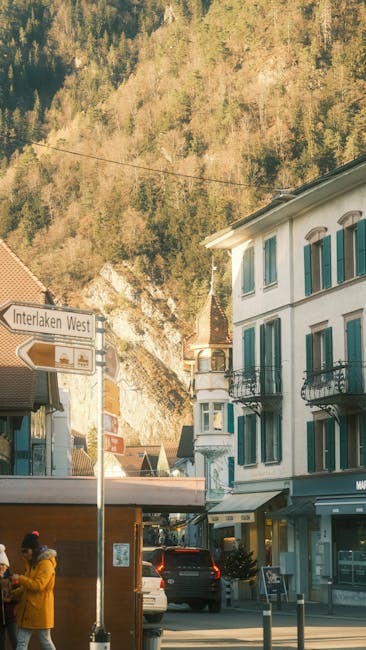
Traveling to Switzerland means not only understanding the national entry and visa rules but also how your chosen destination affects trip logistics. Interlaken, tucked in the heart of the Bernese Oberland, changes the game for many travelers: it’s relatively distant from major airports, relies on alpine rail connections, offers mountain activities that often require specific insurance and sometimes extra paperwork, and experiences strong seasonality that affects schedules and prices. This complete guide gives you a practical, local, and detailed look at visa, entry and administrative issues when your stay is centered in Interlaken.
Interlaken (main station: Interlaken Ost, Bahnhofstrasse 2, 3800 Interlaken, Switzerland) is reachable via several international entry points: airports (Zürich Airport, Flughafen Zürich, Address: Zurich Airport, 8058 Zürich, Switzerland; Geneva Airport, Aéroport international de Genève, Route de l’Aéroport 21, 1215 Genève, Switzerland), international train stations (Zurich Hauptbahnhof, Bahnhofquai, 8001 Zürich) and land border crossings. Entry rules for Switzerland are national — under the Schengen regime for border controls — but the practical steps you take will differ depending on whether you arrive by plane (more formal checks at airports), by train (checks sometimes absent at stations but random inspections possible) or by car (customs at land border posts).
Beyond the visa, staying in Interlaken requires you to plan for practical details that are often overlooked: how to use regional transport (Bernese Oberland Railway, administrative address: Zentralbahn AG, Bahnhofplatz, 6003 Luzern, Switzerland, for connections), which insurance covers alpine activities (paragliding, glacier hikes, Jungfraujoch), where to find consular support in an emergency, and how to handle currency exchange (Switzerland uses the Swiss franc, CHF, but many tourist businesses will accept euros; for clarity we quote prices in euros throughout). Finally, Interlaken is a hub for high-altitude excursions, nature stays and full-service tourism — which often means booking ahead, showing proof of funds for certain visa categories, and preparing for different timetables and costs compared with big cities like Zurich or Geneva.
1) Visa formalities for Switzerland: general rules and Interlaken specifics
The general entry rules for Switzerland are the same for Interlaken as for the rest of the country: Switzerland is part of the Schengen area for border controls. Citizens of the EU/EEA and many other countries do not need a visa for short tourist stays (up to 90 days within a 180-day period). However, some nationalities must obtain a Schengen type C visa before arrival. Check the current requirements on the official website of the Swiss embassy in your country: Embassy of Switzerland (example: Embassy of Switzerland, Address varies by country). For a stay in Interlaken, the main peculiarity is that you will often need to provide a specific Swiss address (hotel or accommodation) and proof of onward or return travel, since local tourist authorities and border checks may request these documents on arrival.
Standard documents to prepare:
- Passport valid (recommended at least 3 months after your planned exit date from the Schengen area).
- Visa Schengen</strong if applicable — apply via the nearest Swiss visa application center.
- Proof of accommodation: hotel confirmation (for example, Victoria Jungfrau Grand Hotel & Spa, Höheweg 41, 3800 Interlaken, Switzerland; indicative rates: €250–€400 per night depending on season).
- Travel insurance covering at least €30,000 for emergency medical treatment and repatriation — mandatory for visa applications.
- Proof of financial means: bank statements or cash. For longer stays, consulates may request more detailed financial documentation.
Practical tips: if you arrive by plane at Zürich Airport (Address: Zurich Airport, 8058 Zürich, Switzerland), allow 2–3 hours for train transfers to Interlaken Ost (approximate second-class fares: €55–€75 depending on booking). From Geneva Airport the journey is longer (around 3.5–4 hours, fares €65–€90). Swiss trains are punctual; keep your tickets and hotel confirmations handy in case of checks. Finally, for winter travel, your insurance should explicitly cover winter sports if you plan to ski, snowboard or take part in high-mountain activities like Jungfraujoch (Top of Europe).
2) Entering by land vs. by air: logistical impacts for staying in Interlaken
Your entry point directly affects your Interlaken experience. Arriving by plane usually involves security and sometimes immigration checks more systematically. The two main international airports that serve Interlaken are Zürich Airport (Flughafen Zürich, Address: Zurich Airport, 8058 Zürich) and Geneva Airport (Aéroport international de Genève, Address: Route de l’Aéroport 21, 1215 Genève). Low-cost flights into Basel-Mulhouse (EuroAirport Basel-Mulhouse-Freiburg, Address: Rue du 2ème BCA, 68730 Blotzheim, France) can also be an option, but they typically require a longer train journey (2.5–3.5 hours) and connections.
Indicative travel times and costs to Interlaken Ost (Bahnhofstrasse 2, 3800 Interlaken):
- From Zürich Airport: 2 h 10–2 h 45 by train, €55–€75 (2nd class), frequent departures via Zürich HB.
- From Geneva Airport: 3 h 30–4 h by train, €65–€90 (2nd class), often via Bern.
- From EuroAirport Basel: 2 h 30–3 h, €50–€80 (2nd class), sometimes via Basel SBB.
- By road (car): 2 h 30–3 h from Zurich depending on traffic; no motorway tolls but fuel costs and the Swiss motorway vignette apply.
Arriving by land (car or international bus) exposes you more to occasional customs checks at border points, especially if you come from a non-Schengen country. For example, the Bardonnex border post (near Geneva) is not far away and random checks do occur. If you cross by car, keep your vehicle insurance certificate with you and buy the Swiss motorway vignette if you plan to use the highways (vignette cost: about 40 CHF, roughly €40; valid 1 year).
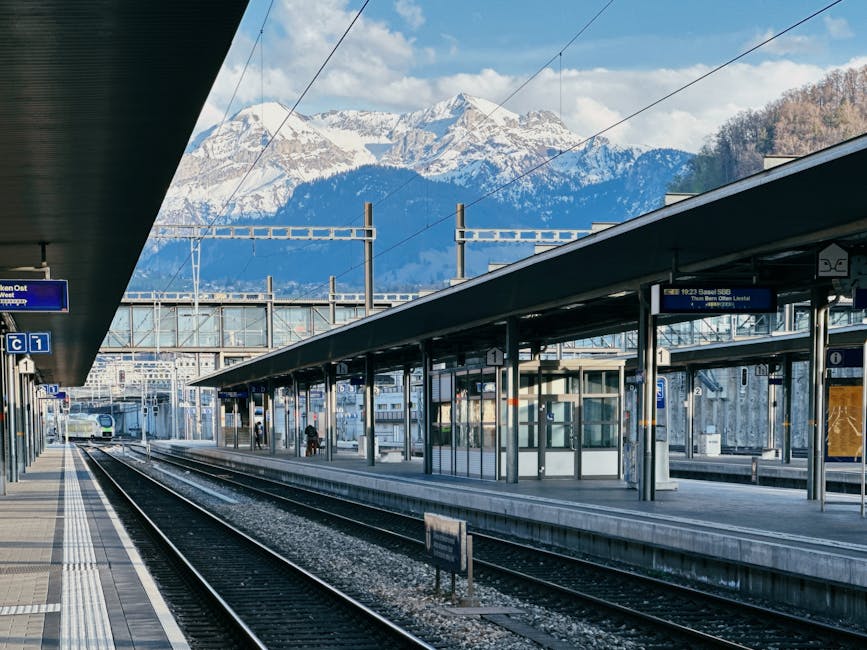
One last logistical note: Switzerland’s rail network is the most reliable and stress-free way to reach Interlaken. International arrival stations (Zurich HB, Geneva Cornavin) have information desks, ticket machines and CFF (Swiss Federal Railways) services, with standard operating hours roughly 04:30 to midnight and limited night trains. Bear in mind that connections for mountain excursions (Grindelwald, Lauterbrunnen, Jungfraujoch) often rely on local trains with set timetables and sometimes limited seating in high season.
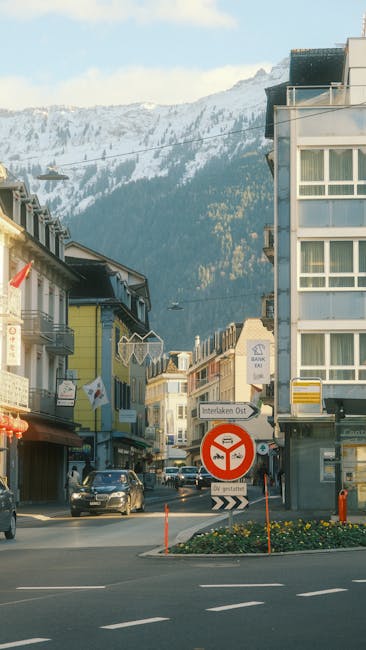
3) Local formalities, insurance and Interlaken-specific costs
Interlaken is an outdoor-activity hotspot: paragliding, canyoning, trekking, glacier excursions. These activities often require insurance and sometimes special permits. For example, for a tandem paragliding flight over Interlaken operated by Swiss Paragliding (ex. address: Höheweg 83, 3800 Interlaken; indicative price: €120–€180 per person depending on duration and season; hours: flights possible 09:00–17:00 depending on weather), you must have liability insurance and travel insurance covering sports-related accidents. Operators usually require a signed waiver and presentation of an ID.
For glacier trips and the Jungfraujoch visit (Jungfraujoch – Top of Europe, Jungfraujoch 1, 3818 Wengernalp, Switzerland — accessible from Interlaken Ost via the Jungfrau Railway), prices are significant: round-trip Interlaken Ost – Jungfraujoch about €140–€200 per adult in low season, €180–€230 in high season. Timetables vary by season: regular departures from 07:00 in the morning, last returns usually around 18:00–19:00. Providers recommend booking online and checking cancellation policies in case of bad weather.
Other costs and useful addresses:
- Interlaken Tourist Office (Tourist Information Interlaken, Höheweg 5, 3800 Interlaken; hours: 08:00–18:00 in high season, 09:00–17:00 off-season; phone: +41 33 827 72 72). Staff provide local maps, train and bus timetables, and info on activity operators.
- Regional hospital (Spital Interlaken, Bälliz 38, 3800 Interlaken; emergency 24/7; have your insurance card or be prepared to pay: emergency consultation €150–€300 depending on care and possible hospitalization).
- Currency exchange and ATMs: available at Interlaken Ost Bahnhof and downtown (withdrawal fees vary by your bank).
Local tips: check the alpine weather every morning (local weather stations or tourist desks); bring thermal layers even in summer for high-altitude excursions; book ahead (accommodation, special trains, activities) 1–3 months in high season (July–August, December–February). Also keep both digital and printed copies of your travel documents within reach — some operators or checks may request a physical proof.
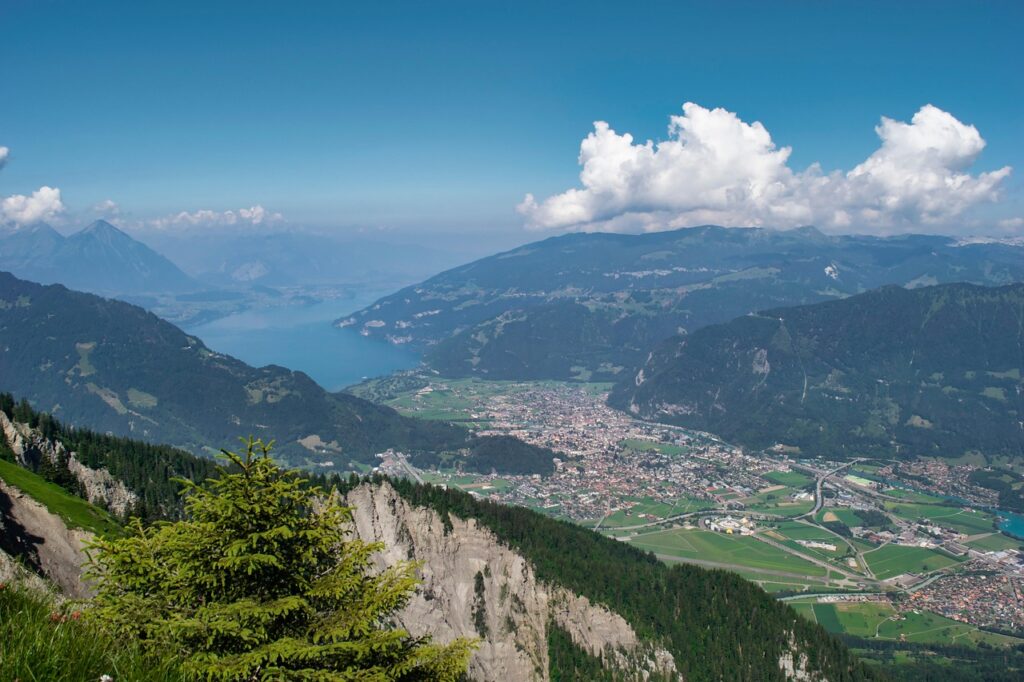
4) Practical tips for a smooth stay: consular contacts, useful numbers and best practices
Before you leave, note down the contact details of your embassy or nearest consulate in Switzerland. For EU citizens, consular assistance can sometimes be provided by other EU member state embassies in case of an issue. Example: Embassy of France in Switzerland (Ambassade de France en Suisse et au Liechtenstein, Talacker 41, 8001 Zürich; consular hours vary — book an appointment via the official website). If you lose your passport in Interlaken, go to the local police station (Kantonspolizei Bern, Polizei Interlaken, Gerechtigkeitsgasse 1, 3800 Interlaken) to file a report; you will often need a consular travel document to return home.
Useful numbers:
- Police/ambulance/emergency: 117 (police) / 144 (ambulance) — nationally valid.
- Interlaken Tourist Office: +41 33 827 72 72 (08:00–18:00 in high season).
- Interlaken Ost CFF station information desk: Bahnhofstrasse 2, 3800 Interlaken; ticket counter generally open 06:00–22:00 depending on season.
Best practical practices:
- Photocopy and scan important documents (passport, visa, insurance card). Keep a copy on a cloud service accessible offline if possible.
- Always carry an ID during mountain excursions: rangers or local authorities may check identities in case of an incident.
- Prepare for unexpected costs: Switzerland is expensive. Budget roughly €80–€150 per person per day for meals, local transport and basic activities; more if you book paid excursions.
- Respect the environment and local rules: protected areas around Lake Brienz and certain hiking trails may have strict schedules and regulations (e.g. some trails closed at night in winter).

Conclusion: planning ahead, preparation and a successful Interlaken experience
A stay in Interlaken needs more preparation than a simple city break because of its alpine location, the nature of activities on offer and the specific transport connections. Visa and entry rules remain those of Switzerland, but transfers, local formalities — booking high-altitude activities, appropriate insurance, proof of accommodation — take on particular importance. Anticipating transfers from Zürich Airport, Geneva Airport or EuroAirport, booking your train tickets and excursions (Jungfraujoch, paragliding, guided hikes) in advance, and ensuring your insurance covers mountain activities are decisive steps to avoid unpleasant surprises.
In practice, prepare a complete travel dossier: passport, visa if needed, hotel confirmations (for example Victoria Jungfrau Grand Hotel & Spa, Höheweg 41, 3800 Interlaken), train tickets, printed travel insurance, and your consulate’s contact details. Check alpine weather and regional train timetables (CFF/SBB) daily since last-minute changes can occur. Finally, factor finances into your planning: although Switzerland uses the Swiss franc (CHF), the euro prices quoted here help you plan your budget. Expect to pay approximately €55–€200 for transfers and excursions, €120–€400 per night for mid- to high-end hotels, and €80–€150 per day for food and local transport — adjust according to your travel style.
With careful preparation, Interlaken becomes an ideal base to explore the Bernese Oberland, from the shores of Lake Thun to the peaks of the Jungfrau, while respecting entry formalities and local requirements. Keep your documents up to date, get the right insurance, book ahead and you’ll enjoy a memorable, safe and smooth stay in one of Europe’s most spectacular alpine landscapes.