


Introduction — Preparing Your Trip to Interlaken: Context, Key Points and First Practical Tips
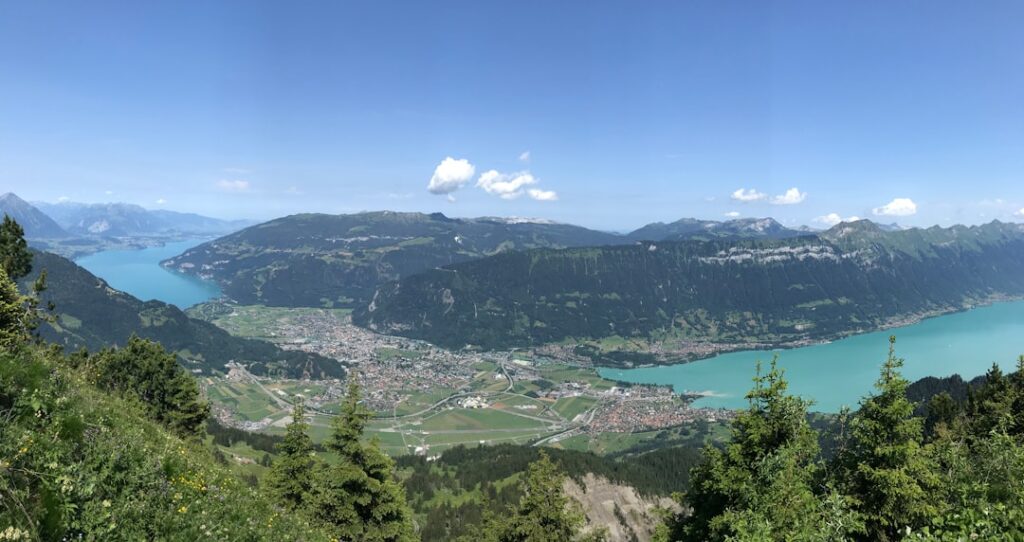
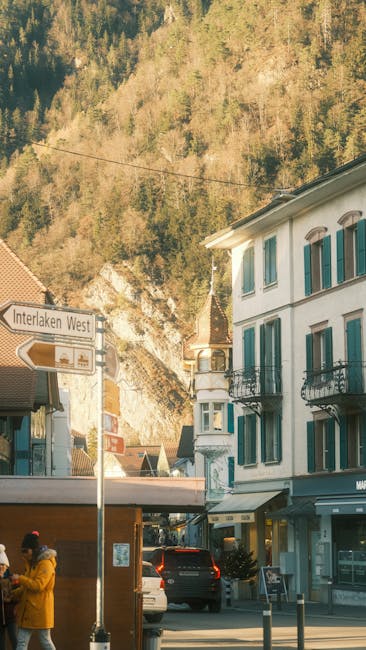
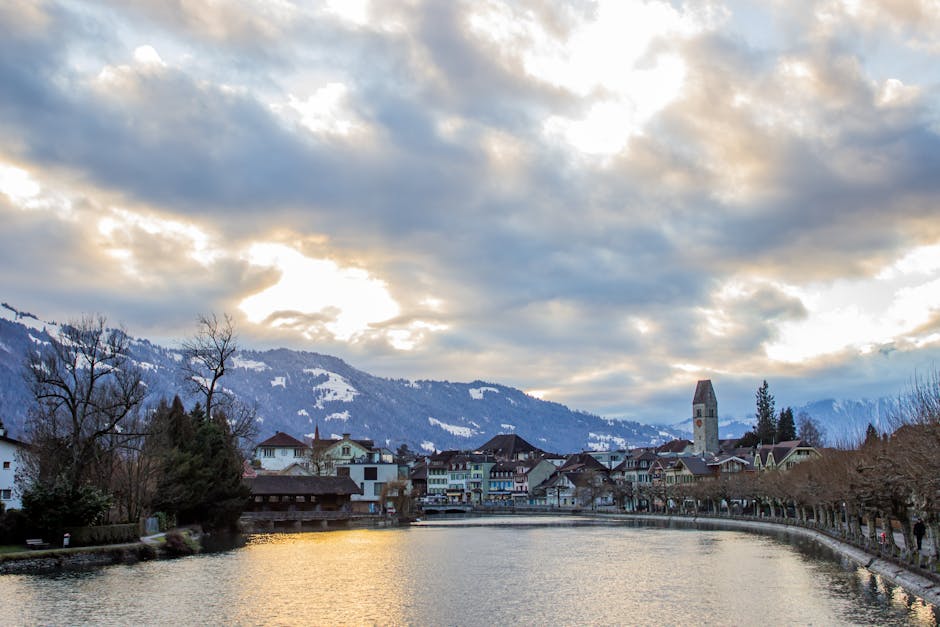
Interlaken, tucked between Lake Thun (Thunersee) and Lake Brienz (Brienzersee) and framed by the iconic peaks of the Bernese Oberland, is one of Switzerland’s top spots for outdoor lovers, alpine views and gateway access to high-altitude highlights like the Jungfraujoch. In this comprehensive guide we cover the formalities you need to visit Interlaken: documents, transport, bookings, schedules, price ranges in euros, exact addresses and local tips that will help you avoid common mistakes. The goal is to get you there relaxed, enjoying the region to the fullest and able to plan your days without surprises.
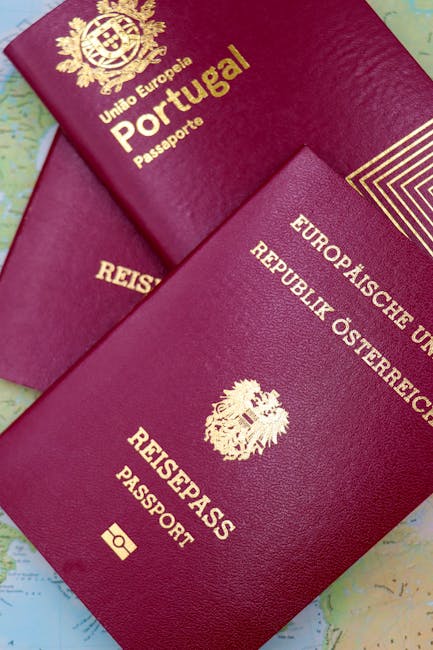
Before any international trip, check your passport: it should be valid for at least three months after your planned exit from the Schengen area if you’re coming from a non-EU/EFTA country. For EU citizens, a valid national ID card is usually enough. Non-European nationals should verify visa requirements with the nearest Swiss embassy or consulate. For short tourist stays (up to 90 days in a 180-day period), many nationalities benefit from a visa exemption, but you must confirm your status before traveling.
Interlaken is very well served by Swiss trains and roads; one essential detail to note is the addresses and opening times of the two main stations:
- Interlaken Ost Station — Bahnhofplatz 3, 3800 Interlaken. Mainline services and regional connections. Hours: generally open 05:00–00:30, Swiss Rail Service ticket counter 07:00–20:00 in high season.
- Interlaken West Station — Zentralstrasse 11, 3800 Interlaken. Quick access to Lake Brienz and the lakeside promenades. Hours: 05:00–00:30, ticket machines available 24/7.
In terms of currency, Switzerland uses the Swiss franc (CHF). However, in Interlaken’s tourist areas many vendors accept euros; prices can be displayed in CHF or EUR. In this guide we’ll list prices in euros (EUR) to make things easier. Quick conversion: 1 CHF ≈ 0.95 EUR (indicative rate, varies). Withdraw Swiss francs from ATMs (for example UBS bank at Bahnhofplatz) or pay by card where possible—check with your bank for fees.
Finally, since Interlaken is a base for high-mountain excursions, some activities require advance booking (Jungfraujoch – Top of Europe, Lake Thun cruises, paragliding). We’ll give exact addresses for agencies and departure points, typical schedules and price ranges in euros so you can organize your stay efficiently. The guide also includes local tips: best times to avoid crowds, getting around without a car, useful addresses like tourist offices, pharmacies, hospitals and money-saving tricks for combined tickets.
Administrative Formalities and Documents Needed to Enter Switzerland and Stay in Interlaken
Before you travel, check visa requirements. For most tourist stays up to 90 days within a 180-day period, citizens of the European Union, EFTA, the United States, Canada, Australia and Japan do not require a visa. Rules can change, so consult the official website of the Swiss embassy in your country or the Fedpol portal. For longer stays (work, study), you must apply for a permit with the Canton of Bern through the cantonal migration authorities.
Documents to prepare:
- Passport or ID card: valid for the duration of your stay. Recommendation: have at least 3 months’ validity beyond your planned departure if your country requires it.
- Visa (if applicable): check with the Swiss embassy.
- Health / Repatriation insurance: for non-EU nationals, travel insurance covering repatriation and medical care is highly recommended. Useful address: Interlaken Hospital, Kirchhoferstrasse 1, 3800 Interlaken — 24/7 emergency service. Phone: +41 33 822 62 62.
- Proof of accommodation: border officers may ask for a hotel reservation or accommodation voucher. The Interlaken Tourist Office can provide confirmations: Jungfraustrasse 2 / Höheweg 5, 3800 Interlaken. Hours: 09:00–17:00 (high season 08:30–18:00). Phone: +41 33 822 31 31.
- Return ticket or proof of funds: sometimes requested on arrival.
If you’re traveling with pets, note that Switzerland requires a European pet passport, microchip and rabies booster according to legislation. Rules differ for arrivals from non-EU countries—check in advance.
Border checks: although Switzerland is in the Schengen zone for border controls, there can be occasional internal checks. Keep your documents on you and have a digital copy available.
Transport, Getting Around Locally and Practical Info (Schedules, Addresses, Prices in Euros)
Getting to Interlaken is straightforward thanks to Switzerland’s rail network. The main station, Interlaken Ost (Bahnhofplatz 3, 3800 Interlaken), is the arrival point for most travelers coming from Bern, Zurich, Basel or Geneva Airport. SBB/CFF trains run frequently: Bern → Interlaken Ost roughly every 30 minutes, travel time 1h00–1h10. Timetables are available on sbb.ch. Ticket counters are open 07:00–20:00 (high season) and machines operate 24/7. Indicative fare: Bern → Interlaken Ost about 28–40 EUR depending on class and discounts.
To get around locally:
- BLS regional buses: stops in the town center and at the stations. Lines to Lauterbrunnen and Grindelwald every 15–30 minutes in high season. Local single fares roughly 3–6 EUR depending on distance.
- Boat on Lake Brienz: departures from the Interlaken Ost quay (Bahnhofplatz, 3800 Interlaken). Operator: BLS Lake Brienz. Schedule: April–October several departures daily, first ≈ 09:00, last ≈ 17:30. Price: Interlaken Ost → Giessbach about 18–25 EUR depending on route.
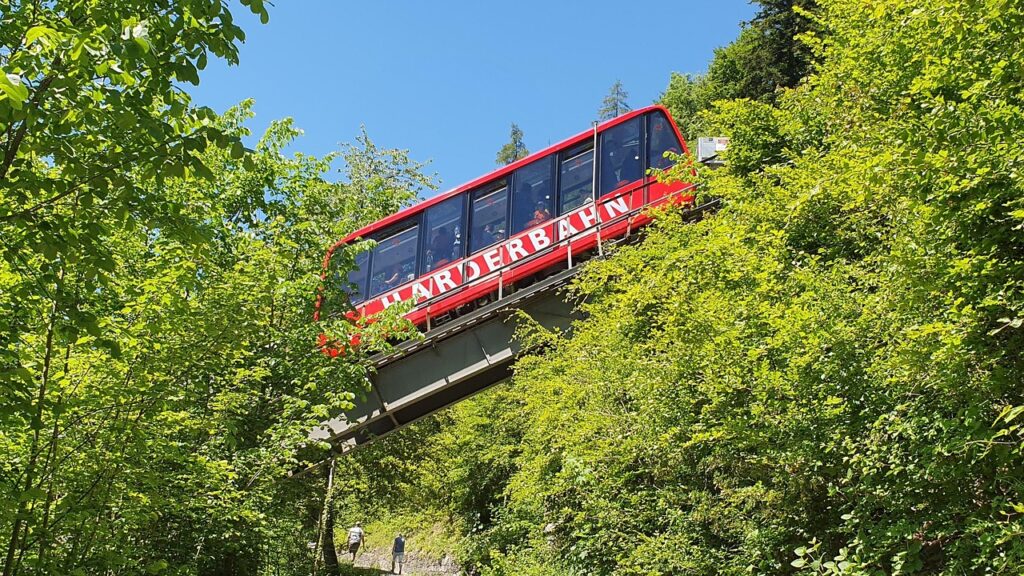
- Harder Kulm funicular (Harderbahn): Harderbahn base station, access near the Höhematte promenade. Orientation address: Harder Kulm, 3800 Interlaken. Hours: 09:00–17:00 (seasonal variation). Round-trip price approx. 18–25 EUR. Panoramic restaurant at the top. Weekend reservations recommended.
- Car hire: agencies at Interlaken Ost Bahnhofplatz and Zentralstrasse. Roads are well signposted; park in paid zones (meters) or public car parks like Parking City Ost, Zentralstrasse. Expect 1.5–3 EUR/hour depending on location.
Money-saving tip: the Swiss Travel Pass (available for 3, 4, 8 or 15 days) offers unlimited travel on trains, buses and boats on the public network and provides discounts for some excursions like Jungfraujoch (partial discount) and Harder Kulm. Indicative price: 3 days, 2nd class ≈ 200–240 EUR (variable). If you plan many trips, it can be cost-effective.
Opening hours for useful services:
- Interlaken Tourist Office — Höheweg 5, 3800 Interlaken. Hours 09:00–17:00 (high season 08:30–18:00).
- UBS Bank Interlaken — Bahnhofplatz 4, 3800 Interlaken. Counter 08:30–16:30, ATM 24/7.
- Interlaken Pharmacy — Apotheke am Höheweg, Höheweg 74, 3800 Interlaken. Hours 08:00–18:30, limited Sunday opening.
Finally, time your outings around the weather: in summer the best times for lake activities and hikes are early morning or late afternoon to avoid crowds and enjoy softer light for photos and walking.
Must-Do Excursions from Interlaken: Jungfraujoch, Schynige Platte, Paragliding — Bookings, Addresses and Detailed Prices
Interlaken is the gateway to some of the most famous alpine excursions. Here’s an overview of the main trips, with departure addresses, typical schedules, prices in euros and booking tips.
1) Jungfraujoch — Top of Europe
- Departure point: Interlaken Ost Station, Bahnhofplatz 3, 3800 Interlaken. Typical route: Interlaken Ost → Lauterbrunnen or Grindelwald → Kleine Scheidegg → Jungfraujoch.
- Hours: frequent departures from 07:30–16:00 depending on connections; total one-way travel time 2h30–3h depending on route.
- Price: round-trip about 160–210 EUR per adult from Interlaken (prices vary, often shown in CHF). Partial Swiss Travel Pass discounts may apply; booking is recommended in high season.
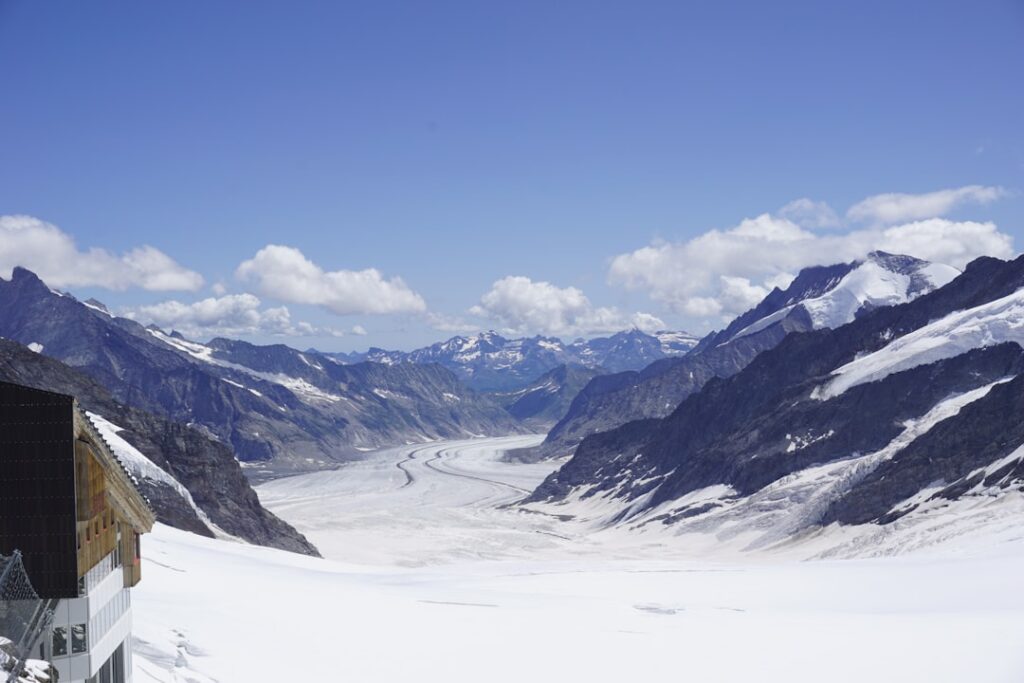
- Description: glacial summit at 3,454 m, tunnels, panoramic plateau, terrace, ice palace and restaurants. Temperatures are low—bring warm clothing even in summer.
2) Schynige Platte
- Departure point: Wilderswil Station, Bahnhofstrasse 1, 3812 Wilderswil (3 minutes by train from Interlaken Ost).
- Hours: cogwheel train operates May–October, first departure ≈ 08:30, last return ≈ 17:00.
- Price: round-trip about 40–55 EUR (seasonal variation), alpine botanical garden and views of the Eiger, Mönch and Jungfrau.
- Description: easy hikes, themed trails, traditional wooden restaurant and highly photogenic panoramas.
3) Paragliding (tandem paragliding)
- Operators: Paragliding Interlaken (office: Höheweg 129, 3800 Interlaken — booking office and meeting point). Other operators: Skywings, FlyInterlaken.
- Hours: flights daily depending on weather, morning slots (08:00–11:00) and afternoon slots (13:00–17:00). Briefings last 30–45 minutes.
- Price: 120–200 EUR per person for a 15–30 minute tandem flight. Photos/videos often offered as add-ons (20–50 EUR).
- Description: takeoff from slopes above Interlaken, landing at the Heide or near the town center. Spectacular views over the Aare, the lakes and surrounding peaks.
Booking tips: for Jungfraujoch and paragliding, reserve at least 2–3 weeks ahead in high season (June–August). E-tickets for trains and excursions are convenient; keep a printed copy if you plan to use Swiss Travel Pass discounts. Always pack a windproof jacket, sunglasses and sunscreen—altitude increases sun exposure.
Accommodation, Dining and Useful Services — Addresses, Price Ranges and Local Tips
Interlaken offers a wide range of accommodation: hostels, boutique hotels, upscale properties and holiday apartments. Here are representative options, exact addresses, price ranges in euros and tips for choosing based on your priorities.
- Hotel Interlaken — Address: Höheweg 74, 3800 Interlaken. Category: 3–4 stars. Price: 110–200 EUR/night depending on season. Description: historic hotel along the Höhematte with a garden, bar and concierge service. Ideal for walking access to the center.
- Victoria Jungfrau Grand Hotel & Spa — Address: Höheweg 41, 3800 Interlaken (Kursaal/Victoria complex). Category: 5 stars. Price: 300–800 EUR/night depending on room and season. Description: luxury, spa, fine dining and Jungfrau views. Valet service; reservations recommended.
- Backpackers Villa Sonnenhof (hostel) — Address: Zentralstrasse 86, 3800 Interlaken. Price: dorms 25–45 EUR/night, private rooms 60–120 EUR.
- Airbnb / apartments: many options in the center; choose listings with air conditioning and a kitchen for longer stays. Average prices 80–220 EUR/night.
Recommended restaurants:
- Restaurant 3a — Address: Höheweg 12, 3800 Interlaken. Contemporary Swiss cuisine. Main courses 18–35 EUR.
- Restaurant Taverne — Swiss fondue and rösti specialties — Address: Höheweg 67, 3800 Interlaken. Fondue for two 40–60 EUR. Hours: 11:30–22:00.
- Kaffeehaus Interlaken — Address: Marktgasse 23, 3800 Interlaken. Pastries, coffee and brunch, prices 6–18 EUR. Hours 08:00–18:00.
Useful services:
- Pharmacy — Apotheke am Höheweg, Höheweg 74, 3800 Interlaken. Hours 08:00–18:30.
- Regional hospital — Spital Interlaken, Kirchhoferstrasse 1, 3800 Interlaken. Emergency 24/7. Phone: +41 33 822 62 62.
- Equipment rental — Sportzentrum Interlaken, Zentralstrasse 55, 3800 Interlaken. Bikes, kayaks, skis and mountaineering gear. Bike rental 20–45 EUR/day, skis 30–60 EUR/day.
Local tips: compare small restaurants and taste regional dishes — try rösti with local cheese and smoked meat. To save money, pick up picnic supplies at Migros or Coop and enjoy public spaces like Höhematte Park. For premium travelers, check if your hotel issues a guest card (visitor card) offering transport and museum discounts.
Rules, Safety, Health and Local Advice for a Hassle-Free Stay
General safety: Interlaken is a safe destination but, as anywhere, watch your belongings in busy areas (stations, tourist spots). Pickpocketing is uncommon but possible. Swiss emergency numbers: 112 (EU emergency), 117 (police), 118 (fire), 144 (ambulance). Save at least one emergency number or store it in your phone.
Health and altitude: if you head up to high peaks (Jungfraujoch 3,454 m), be aware of altitude sickness symptoms: headaches, breathlessness, nausea. Ascend gradually if you can, stay well hydrated and avoid alcohol before the climb. Pack basic medications (painkillers, bandages, thermometer) and a first-aid kit. For medical care: Spital Interlaken, Kirchhoferstrasse 1, 3800 Interlaken, emergency 24/7 (+41 33 822 62 62).
Local rules and the environment: Switzerland places strong emphasis on cleanliness and nature conservation. Stick to marked trails, take your trash with you, use bins and recycling where available. Wild camping in nature reserves is restricted—check rules before pitching a tent. Open fires are forbidden outside designated areas.
Climate and clothing: Interlaken has a temperate alpine climate. In summer, pack light layers for daytime, a waterproof jacket and a warm layer for evenings; at high altitude bring thermal layers. In winter, bring insulated clothing, proper boots and crampons if you plan snowy hikes. Sturdy hiking shoes are recommended for mountain trails.
Practical local tips:
- Monday mornings and late afternoons are less busy for visiting popular sites.
- Arrive early at the quay for boat excursions (first departures around 09:00) to avoid crowds.
- If you rent a car, obey speed limits and alpine signage; city-center parking is often paid between 08:00–18:00.
- To save money, check combined tickets (train + funicular + boat) and Swiss Travel Pass offers.
Conclusion — Summary of Formalities and Final Preparation Reminders
Visiting Interlaken requires a bit of planning: check your entry documents (passport/ID/visa), take out appropriate travel health insurance, organize transfers and pre-book popular alpine excursions (Jungfraujoch, paragliding, lake cruises). Key addresses such as Interlaken Ost station (Bahnhofplatz 3, 3800 Interlaken), the tourist office (Höheweg 5, 3800 Interlaken) and the local hospital (Spital Interlaken, Kirchhoferstrasse 1, 3800 Interlaken) will be useful if needed. We provided price ranges in euros to help you budget: Jungfraujoch 160–210 EUR, Harder Kulm funicular 18–25 EUR, paragliding 120–200 EUR, accommodation from 25 EUR (hostel) to 800 EUR (luxury palace) depending on comfort level.
Be flexible with plans: weather can affect high-altitude operations and departures for some sites. A good strategy is to have backup activities ready (local museums, lakeside walks, a visit to the chocolate museum or a cheese-tasting). Also make the most of Swiss public transport, known for punctuality and comfort — Interlaken Ost station is your main hub.
Finally, respect local customs: cleanliness, quiet and courtesy are expected. Bring a basic first-aid kit, a solid pair of hiking shoes and warm clothing for mountain excursions. With these formalities sorted and these tips in your pocket, your stay in Interlaken should go smoothly — between alpine panoramas, crystal-clear lakes and unforgettable experiences. Have a great trip and enjoy the Bernese Oberland!